
What is Keyword Clustering (in SEO)
When you plan to write blogs or web‑pages, you often start with a list of keywords: phrases that users might type into Google or other search engines. But if you treat each keyword independently, you may end up creating many similar pages that compete with each other — or miss the bigger picture of how topics are related. That’s where keyword clustering comes in.
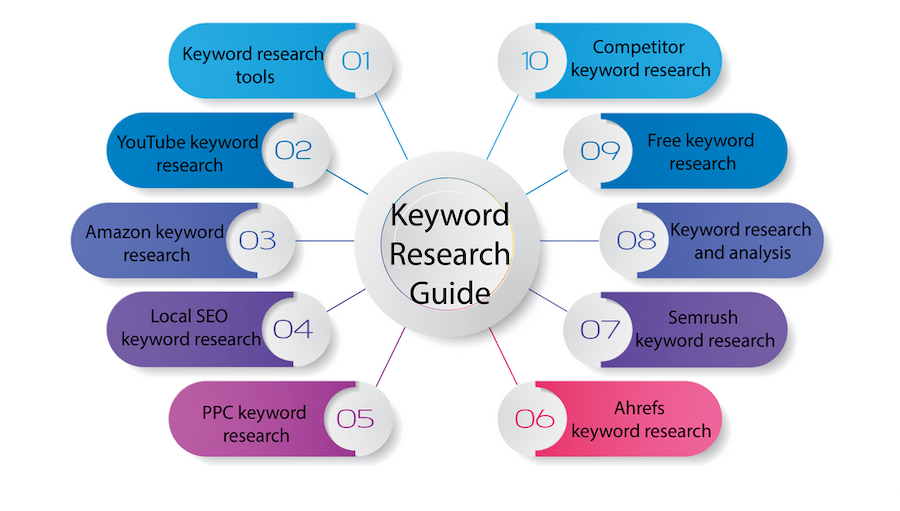
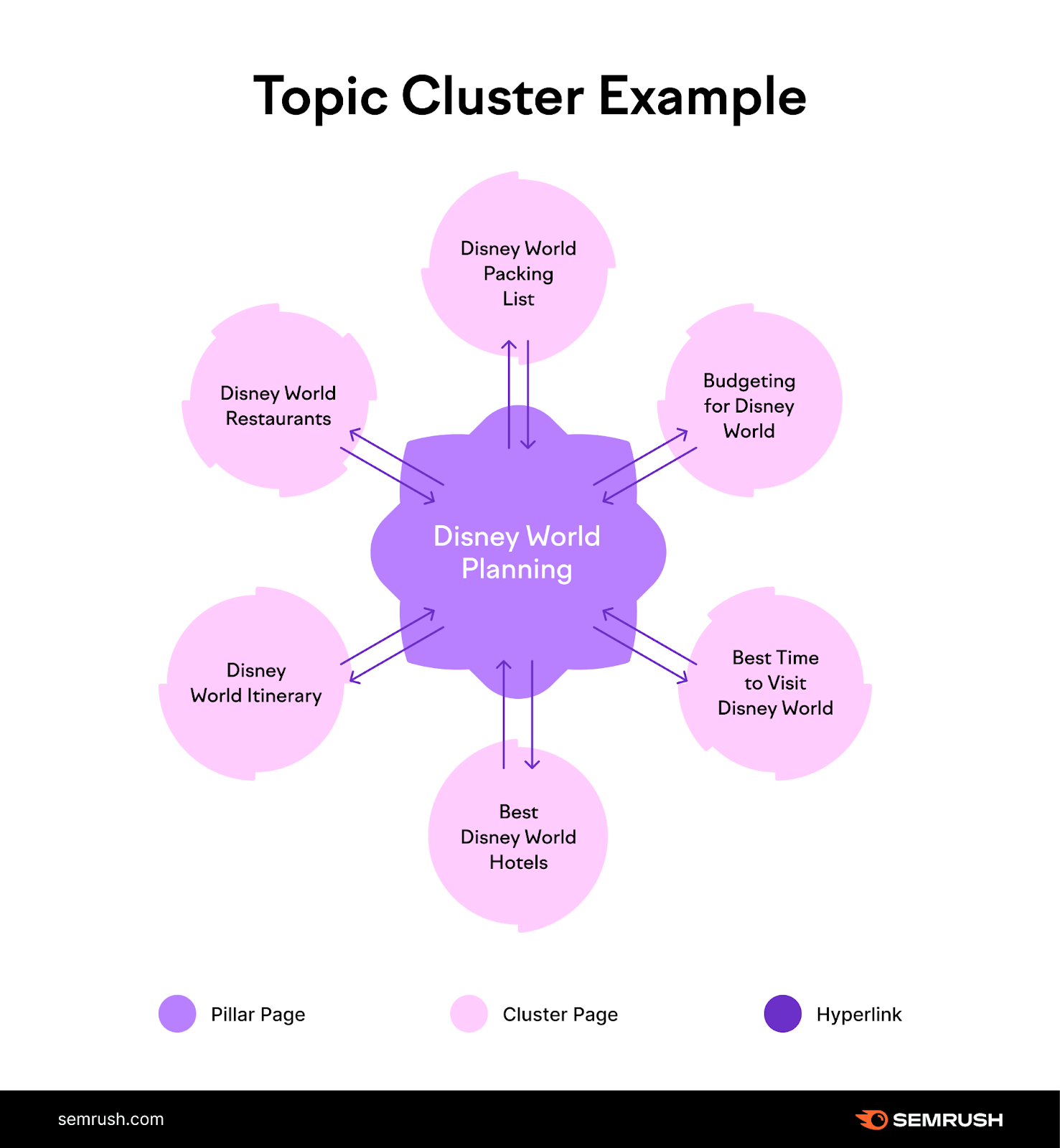
Keyword clustering means grouping together keywords that are semantically related — in other words, keywords that share similar meaning, intent, or topical relevance. Instead of optimizing a page around a single keyword, you optimize one page (or a small group of pages) around a cluster of related keywords. This helps your content cover a topic more completely, and signals to search engines that your page is authoritative and comprehensive on that topic. (keysearch.co)
Clustering can also help you avoid “keyword cannibalization” (where multiple pages compete against each other for the same keywords) and instead focus the strength of your content on a unified page or tightly related pages. (keysearch.co)
Why Using a Keyword Clustering Tool Matters
If you have just a handful of keywords, manual grouping might work. But when you have hundreds or thousands of keywords — for example after doing broad research using keyword‑research tools — manually handling groups becomes painful and error‑prone. Keyword clustering tools help by automating the grouping process, often using algorithms to detect semantic similarity or search‑intent patterns.
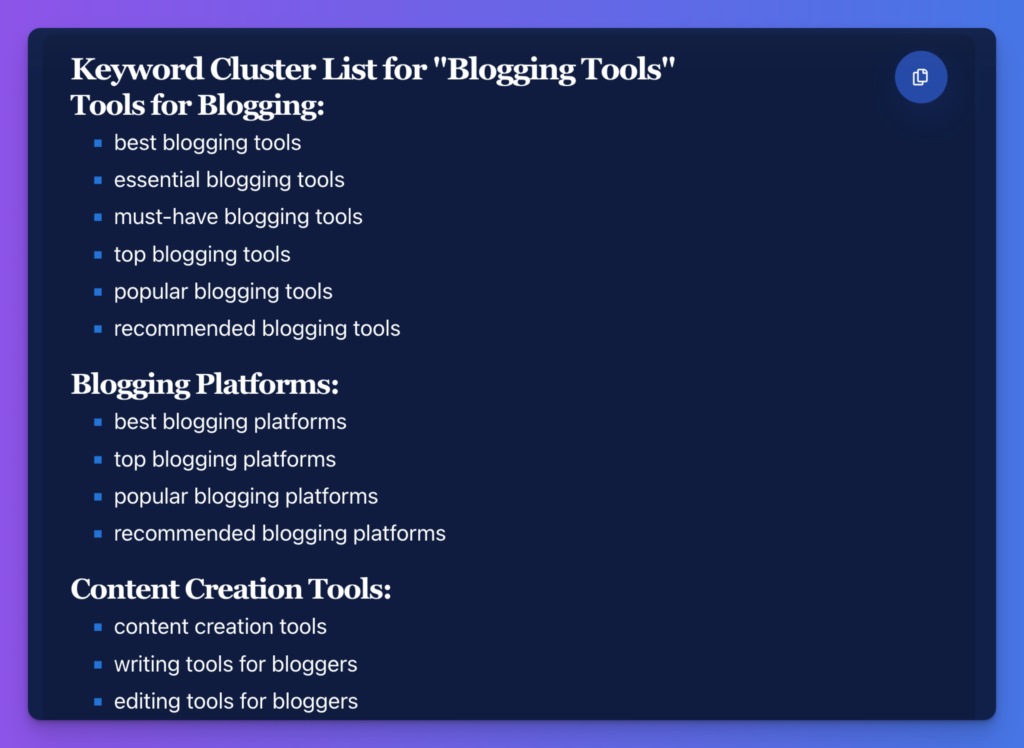
Here are some of the main benefits of using such tools:
-
You can process large keyword lists quickly: many free tools support hundreds or even thousands of keywords. (keywordclustering.zenbrief.com)
-
Automatic grouping saves time and reduces manual errors.
-
Helps you plan content more strategically: one cluster = one “pillar” post with sub‑topics, rather than dozens of fragmented posts.
-
Improves your chances with SEO: covering all related keywords and intent increases topical depth, which search engines favor. (keysearch.co)
-
Prevents duplicate content and overlap between pages, which reduces internal competition and boosts clarity for both users and search engines. (keysearch.co)
Some Good Free Keyword Clustering Tools
Here are a few free (or freemium) tools you can use right now to cluster your keywords. Each has a slightly different approach — this gives you flexibility depending on your project size and needs.
-
Zenbrief Keyword Clustering Tool — Accepts lists of keywords (copy‑paste or file upload), and clusters them based on semantic similarity. Free tier allows clustering up to 5,000 English keywords. (keywordclustering.zenbrief.com)
-
Keysearch Keyword Cluster Tool — A fully free tool (no immediate paywall) that lets you paste a list of keywords and get them grouped by related topics. Good for building your content around “clusters” rather than single keywords. (keysearch.co)
-
Cluster Army / Clusterizer — A tool that reads large keyword lists (even tens of thousands of rows), analyzes term distributions and stem‑/token-frequency, then builds clusters based on recurring stems, pairs, triples etc. Useful for big keyword lists and deeper analysis. (cluster.army)
-
Thruuu Semantic Keyword Clustering Tool — Offers semantic clustering and can create keyword groups automatically. While the free tier has limits (usually around 500 keywords for free), it's good for small to medium keyword sets. (thruuu.com)
-
Scalenut Topic Cluster Tool — Lets you input a primary keyword or upload a full list, then generates clusters relevant to that keyword (and optionally target location). Useful if you want to build an SEO content hub around a central topic. (scalenut.com)
Each tool has its own strengths — some are better for quick jobs, others for large-scale keyword lists.
How to Use Keyword Clustering in Your Content Strategy
Using clustering tools is only the first step. To make the best out of them, you should integrate the results into your content planning, writing, and SEO structure. Here’s a step‑by‑step approach you can follow:
First, collect a comprehensive keyword list. Use keyword research tools (free or paid) to dig up both “short‑tail” and “long‑tail” keywords relevant to your niche. Once you have the list, paste (or upload) into your preferred clustering tool. The tool will output groups: each group represents a set of semantically or intent‑related keywords.
Then — examine each cluster and treat each as a potential “pillar + subtopic” structure. For example, one cluster might represent a main topic (the pillar), while related clusters or keywords within it become subtopics. Writing one comprehensive article covering the whole cluster (or a main article supported by smaller linked articles) helps you cover all related search intents — and reduces the risk of internal competition.
While writing, sprinkle not just the main keyword but also the related keywords from its cluster — naturally within headings, subheadings, paragraphs, synonyms, and related terms. This helps search engines understand the topical breadth and semantic depth of your content.
Also, use internal linking: if you split clusters into multiple pages, link them logically. This helps users navigate — and helps search engines crawl and understand your site’s structure.
Finally, monitor performance. Over time, you may see that pages built on clusters tend to attract more organic traffic, longer engagement, and rank for many related keywords — not just one.
Potential Limitations — And What to Watch Out For
Keyword clustering is powerful — but it’s not a magic wand. Here are some limitations or caveats to keep in mind:
-
Not all tools are equal: Some clustering tools rely only on superficial similarity (similar words, stems), while others try semantic analysis. If your cluster is based only on word similarity, you might get groupings that look related but differ in user intent.
-
Over‑clustering risk: If clusters become too broad, you might end up writing content that is unfocused or tries to cover too much — which could dilute clarity.
-
Under‑clustering risk: On the flip side, too many clusters (or too narrow grouping) may lead to many small articles — defeating the purpose of clustering.
-
Free‑tool limitations: Many free clustering tools have limits in number of keywords, or restrict advanced features (like export, SERP‑based clustering). For massive sites or big keyword research, you might need to combine tools or consider paid options.
-
Intent mis‑alignment: Tools might group keywords that look similar but are used by users with different intent — e.g. “buy X” vs “learn about X.” You must manually review clusters to ensure content matches intent.
My Take: When You Should Use Keyword Clustering
If you’re writing blogs, content, or building a website with many topics — especially if you aim to cover a broad topic deeply — clustering is a must. It helps you:
-
Organize content in a structured, logical way
-
Cover a topic comprehensively (not just surface level)
-
Reduce duplication between pages
-
Improve chances of ranking for many related keywords with one well‑optimized page (or set of pages)
For small one‑off articles (maybe just one or two per month), clustering may not be essential — a simple keyword research and manual writing may suffice. But once you plan to produce multiple posts, or build authority in a niche — clustering saves time, reduces mistakes, and improves content quality.
Given your background — you already aim to write SEO‑friendly blog posts (as we discussed) — using clustering tools could significantly improve your efficiency and search performance.
Conclusion
Keyword clustering — grouping semantically or intent‑related keywords into clusters — is a modern SEO best practice that helps you plan content more smartly. With free tools like Zenbrief, Keysearch, Cluster Army, Thruuu, Scalenut (and more) available online, you don’t need big budgets to get started.
Used properly, clustering helps you create authoritative, topic‑rich content, avoid keyword cannibalization, and improve overall SEO performance.