
When you launch a new website, you’re starting with a blank slate: no traffic, few (or no) backlinks or authority, and search engines have little reason yet to trust or prioritize your site. Without a clear keyword strategy, your content risks being invisible — even if it’s great. That’s because search engines rank pages partly based on whether your content matches what people are looking for, using the words people type (keywords) as signals. (Yoast)

Keyword research helps you discover the actual words and phrases your target audience uses. If you optimize your content for the wrong words — words people don’t search for — you may never reach them. (Yoast)
In short: for a new website, a good keyword strategy is the foundation — like the blueprint before constructing a house. It guides your content, helps attract the right visitors, and sets the stage for growth. (nowmediagroup.tv)
Step 1: Define Your Goals and Understand Your Audience
Before diving into tools or keywords, first ask yourself:
-
What is the purpose of your website? (e.g. blog, service offering, e‑commerce, informational)
-
Who are your ideal visitors? What questions are they likely to search?
-
What problems or needs are you solving for them?
Your answers will shape your keyword strategy. For example, a blog about vegetarian cooking will use very different language than a site offering plumbing services. Choosing keywords that reflect your audience’s real needs helps you match search intent — what the user expects behind the search. (nowmediagroup.tv)

Brainstorm “seed keywords”: simple words or short phrases related to your topic/niche. These will be the starting point for expanding into more refined keyword ideas. (nowmediagroup.tv)
Step 2: Expand Your Keyword List — Tools, Ideas, and Brainstorming
Once you have seed keywords, it’s time to expand and discover more specific phrases people might use. There are several ways to do this:
-
Use keyword research tools such as free or paid tools (for example, the ones many SEO professionals rely on) to generate ideas. (Semrush)
-
Use search engine auto‑suggest / autocomplete: begin typing your seed keyword into search (e.g. Google, Bing) and note what suggestions appear — these often reflect real queries people are typing. (digitalwebxpert.com)
-
Think of different search intents: People may search for simple information, comparisons, local needs, solutions, or to buy. Your keyword list should reflect those possibilities. (digitalwebxpert.com)
-
Look at what your competitors are doing: Examine websites similar to yours, and see which keywords they rank for. This can give you ideas and show where you might find gaps or opportunities. (Ahrefs)
This expansion phase helps you build a larger, richer pool of keywords — both broad and specific — from which you can choose.
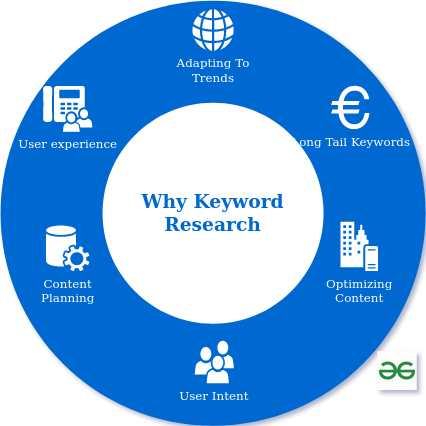
Step 3: Analyze Keywords — Volume, Competition, Difficulty
Not all keywords are equal. Once you have a long list of candidate keywords, you need to evaluate them to pick the best ones for your new site. Good keyword analysis involves checking:
-
Search Volume: How many people search for that keyword in a month? High volume means more potential traffic. (Rush Analytics)
-
Competition / Difficulty: How many websites are already trying to rank for that keyword? How strong are they (authority, backlinks, etc.)? For a new website, trying to rank for highly competitive keywords is usually unwise. (Rush Analytics)
-
Search Intent: What does the user want when they type that keyword? Are they seeking information, comparing options, or ready to purchase? Choose keywords whose intent matches your page purpose (blog post, service page, product page, etc.). (digitalwebxpert.com)
Because new websites lack authority, the ideal keywords often have moderate-to-low competition, with reasonable search volume — not necessarily the very highest search volume. This makes it easier to rank for them. (digitalwebxpert.com)
Step 4: Focus on Long-Tail Keywords (and Avoid Overly Competitive Short Keywords)
A critical principle especially for new websites is to prioritize long-tail keywords over generic “head” terms.
-
Short‑tail (head) keywords: Usually 1–2 words; broad; very high search volume; very high competition. Example: “web hosting”, “digital marketing”.
-
Long-tail keywords: Phrases of 3 or more words; lower search volume; more specific; much lower competition; and often higher user intent. Example: “best web hosting for small blog 2025”, “digital marketing tips for small business in India”.
For a new website, long-tail keywords often lead to better results because you stand a higher chance of ranking, and visitors searching long-tail phrases often have clearer intent — they know what they are looking for. (Forbes)
Additionally, long-tail keywords help you avoid direct competition with big established sites, giving your new site a fighting chance. (Ahrefs)
Step 5: Organize Keywords — Clustering and Page Strategy
Having a big list of keywords is good — but to make effective content, you need structure. That’s where keyword clustering and content planning come in. (Semrush)
Here’s how to do it:
-
Group related keywords thematically: For example, if your site is about “home gardening,” you might cluster keywords about “vegetable gardening,” “organic fertilizers,” “balcony plants,” etc. These clusters help ensure your content covers related topics comprehensively. (Semrush)
-
Assign keywords to pages thoughtfully: Your site can have different kinds of pages — e.g. a homepage, main “pillar” pages (broad topics), blog posts (subtopics), service/product pages, FAQ pages, etc. Each page should target a set of relevant keywords (primary + related ones) — not random or overlapping in a messy way. (Bruce Clay, Inc.)
-
Use a primary keyword per page, plus a few related (secondary) keywords: As a rule, each page should focus primarily on one main keyword, and then naturally include a few semantically related ones. This helps search engines understand the page’s main topic while still covering variations. (Bruce Clay, Inc.)
Organizing keywords this way helps you build topical authority — search engines can better understand which topics your site covers and index accordingly. (StoryLab)
Step 6: Write Content Naturally, Optimized but User-Friendly
When you start writing content around your chosen keywords:
-
Use your primary keyword in key places: title (H1), at the start (first 100 words), perhaps in headings (H2/H3), and in places like meta description, image alt text, URL slug — but don’t overuse. Over-stuffing keywords is a red flag and worsens readability. (digitalwebxpert.com)
-
Include related or semantic keywords (synonyms, variations, LSI keywords) naturally — this helps search engines understand context and broad relevance. (nowmediagroup.tv)
-
Write for humans first: content should be clear, helpful, engaging, and solve real user needs. Good readability, structure, and value matter as much as keyword placement. (Dr. Chetan Dhongade)
-
If you include images, optimize them too (alt text describing the image with relevant keywords) — this helps search visibility and accessibility. (digitalwebxpert.com)
Remember: the aim is not just to rank — but to satisfy user intent. Pages that answer questions well, are easy to read, and deliver value tend to perform better long-term. (Yoast)
Step 7: Monitor, Measure and Refine — SEO Is Not One-Time
Keyword strategy isn’t a “set it and forget it” task. Once your pages are live, you should regularly monitor how they are performing, and refine your strategy over time. Here’s what that involves:
-
Use analytics tools (free or paid) to track which keywords are bringing traffic, which pages rank for what, where users come from, etc. (digitalwebxpert.com)
-
As your site gains authority (backlinks, traffic, brand recognition), you can start targeting slightly more competitive keywords, or broader terms. (nowmediagroup.tv)
-
Revisit your keyword list every few months (or whenever you add new pages / content categories). Trends change; user interest shifts. Updating keywords keeps content relevant. (digitalwebxpert.com)
-
Expand content gradually: add new pages for new keyword clusters, deepen coverage on topics, internal linking, build topical authority. (Semrush)
Common Mistakes to Avoid — and How to Steer Clear
Because keyword strategy is tricky, especially for newcomers, here are common pitfalls — and how to avoid them:
-
Mistake: Targeting only high-volume, very competitive keywords.
Fix: Balance volume with competition; prefer long-tail or mid-competition keywords early on. (digitalwebxpert.com) -
Mistake: Ignoring search intent — writing content that doesn’t match what users actually want.
Fix: Always think about why a user might type that keyword and what they expect to find. Make content that fulfils that intent. (digitalwebxpert.com) -
Mistake: Keyword stuffing or unnatural placement — writing for search engines, not people.
Fix: Prioritize readability and value. Use keywords naturally and sparingly. (Bruce Clay, Inc.) -
Mistake: Random, unorganized keyword use — no structure, no clustering, pages optimizing overlapping keywords.
Fix: Plan your site’s structure. Group keywords by theme; assign them to specific pages. Use primary + related keywords per page. (Semrush) -
Mistake: Treating keyword research as a one-time job.
Fix: Treat it as ongoing. Monitor performance, refresh periodically, adapt to changes. (digitalwebxpert.com)
How Keyword Strategy Fits into Overall SEO for New Websites
Keyword strategy is just one piece of the bigger SEO puzzle — but for new websites, it is one of the most important. With a good keyword foundation, you can build content, internal links, and gradually expand your site’s reach.
Beyond keywords, other factors will matter too: site architecture, internal linking, content quality, user experience, backlinks. But if your content isn’t aligned with what people search for, the rest won’t matter much. That’s why many SEO experts consider keyword research and strategy the first step — the blueprint of SEO success. (Yoast)
With time, as your site gains traction and authority, you can target more competitive keywords, broaden topic coverage, and even build pillar pages and content hubs — but only if you started with a solid keyword strategy.
Final Thoughts — Build Smart, Grow Steadily
For anyone launching a new website, diving straight into writing content without a thoughtful keyword strategy is like building a house without a foundation. You might get some traffic by chance, but long-term growth will be unstable.
A good keyword strategy helps you understand your audience, align content with search behavior, and increase your chances of being discovered — especially in the early days when authority is low. Over time, as you build content, links, authority, you can aim higher.
If you follow the steps above with patience, planning, and consistency, you’ll give your website the best shot at healthy growth, better visibility, and loyal visitors.